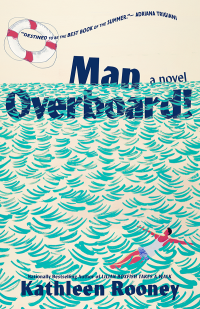
Man Overboard

Man Overboard is a novel of reflection on one’s life, prompted by an unexpected circumstance, reminding us we don’t know what tomorrow holds, or if we will even have a tomorrow. 

We are introduced to our protagonist, Patrick ‘Kick’ Kilpatrick as he is treading water in the Gulf of Mexico, wondering how he got there, & why the ship he was on just moments before, sails on without him.

Did he jump or did he fall? Regardless of the answer, Kick spends the better part of 24 hours treading water, working tirelessly to stay alive with every ounce of energy he has. In doing so his life passes before his eyes and he shares it all with us.

Kick questions his life decisions, the relationships he had and has now. He reflects on a life lived with an absentee mother, his sister who gets him and whom he loves (I think) genuinely more than any one else. We learn of the relationship he had with his father, and his thoughtful step mother. 

Man Overboard isn’t about his survival in the water, but more of a psychological reckoning; a mental count of who he is, was and – if somehow blessed with an unlikely rescue   – who he will be. 

Rooney’s story was a transparent look into Kick’s life that I found relatable. It seemed natural for me to think back on my own life and wonder what changes I’d make, if given an opportunity.

Would I make amends where I should? Would those I want to make amends with even want me to do so? Or rather I just move along? Knowing I can’t change the past, how would I live the remainder of my days? Have I learned enough to make sure I live without regrets?

As the reader, we are fortunate in knowing we have that opportunity for reflection and action. But as we read, we don’t know if Kick will have that luxury.

Man Overboard is markedly different from every other novel Kathleen Rooney has published. But in all of them I find joy in her voice. I hear it in all she writes. That genuine and thoughtful voice. The understanding and empathetic voice. It is as witty and knowing as it is clever and thought provoking. 

After I finish a book, I need to give myself a week’s time before rating or reviewing it. Writers go through so much when writing a book, then there’s the publishing process.  It’s a lot. An immediate reaction without thought isn’t (what I would consider) fair.  A numerical rating, no matter what it is, simplifies an extraordinary effort.

Writers don’t deserve that.

So, I am not giving one.  The story was a good one. I felt moments of suspense & genuinely laughed out loud several times. It provoked thoughts of my own life. So, with all that, and Rooney’s voice, I thought it was lovely.

I really hope you enjoy it as much as I did.

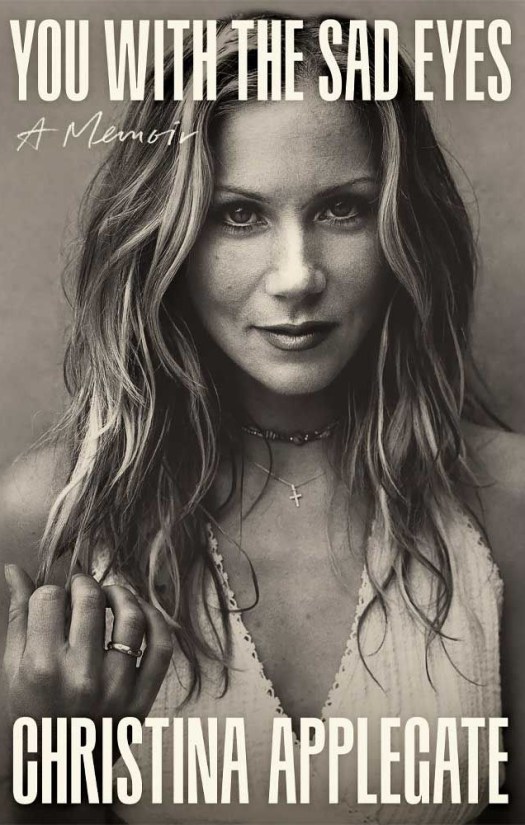
You with the Sad Eyes – A Memoir by Christina Applegate

You with the Sad Eyes - A memoir by Christina Applegate

F**k.

Despite that being the first word of this review, there is no shortage of words to describe this woman. Resilient. Dogged. Fighter. Modest/humble. Survivor. Ostensibly vulnerable, yet never weak. Funny, often self-deprecating with her humor and at times facetious. Most of all, human.

Very human.

So, before you start, I need you to get Kelly Bundy out of your head. It isn’t about her. Don’t get excited about, or look forward to, stories about Samantha Newly (Samantha Who?), Jen Harding (Dead to Me), Veronica Corningstone (Anchorman movies) or even her stint opposite Ricky Schroeder on Silver Spoons (yeah, I had no idea either … apparently Jason Bateman and Alfonso Ribeiro were regulars along with appearances by Matthew Perry, Sharon Stone, Joey Lawrence [whoa!] and Whitney Houston [a month before her first single, Saving All My Love For You, hit #1].

You With the Sad Eyes is not about any of them. This is about Applegate, and not a trip down memory lane with Bud, Peg and Al.

It is a very human story that talks about a less than enviable childhood, being drugged and sexually abused, breast cancer, and Multiple Sclerosis. It is about an angering and heartbreaking period of her life trapped in a relationship which was physically, emotionally and verbally abusive.

That was excruciating to read. It makes you better understand how women – regardless of fame, fortune, influence and appearances – can be trapped and feel unable to escape in abusive relationships for genuine fear of their life, and those they love. If it doesn’t, you’re a psychopath (yes, I know the difference between this and a sociopath).

It doesn’t matter who you are, or your station in life, thousands upon thousands of women live in fear of men who use varying forms of abuse to feel in power. These are small-minded, weak and insignificant little creatures who thrive on making women live in constant fear. Men who deserve to feel unspeakable and indescribable amounts of pain with little-to-no chance of reprieve, for the rest of their days.

As a woman I admire and love greatly once told me, “Forgiveness is God’s job, not mine.”

Applegate never says who he was, but I hope his name will surface one day and his comeuppance will be made public, and well documented.

It was a month before its release that I learned she had a book coming out. I was excited to hear everything about her, and I decided then and there I am going with the audiobook. I wanted to hear her tell me everything.

Well, she does.  So, prepare yourself. I’m nearly certain it will leave you stunned and wordless. I finished this book a week ago and didn’t feel right about saying anything until now.

Yes, the first word of this review began with a swear which began with an “f” ended with a “k,” and wasn’t firetruck. I am aware of this. But it was not used gratuitously to garner attention. It was because it was my first thought, and the first word which passed through my lips, moments after I finished.

Who knows? It might cross your mind, too.

This gets five stars from me but not only because of how it was written and or how well she narrated it (very well, I might add).   But also, because of how raw and exposed she let herself be.

It was staggering.

…and I am not going to call her brave for doing so, mostly because I do not like that word and think it is thrown around too frequently diluting its true meaning.  We are not talking about women and men who work in emergency services or ducking artillery in a bunker.  I will, however, use words like altruistic, enduring and doting – all hopefully received here as the very best of someone. A person whose life story can be a channel for those who come after, seeking help and the support they deserve, yet made to feel by others that they aren’t.

Well, they are deserving.

You are deserving.

… and she wants to make sure you know it.

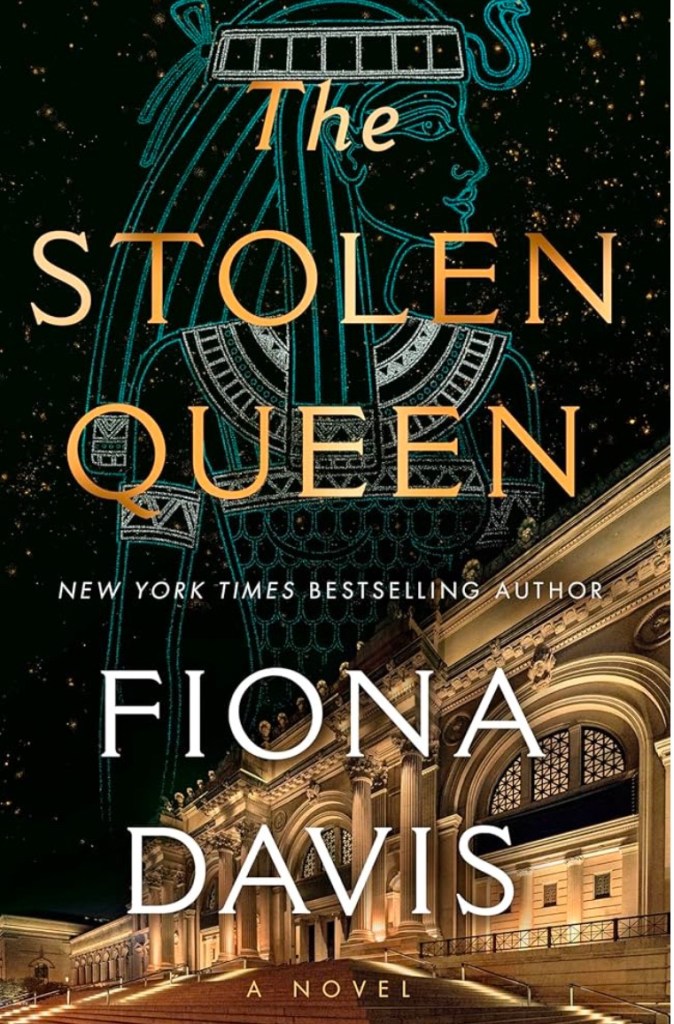
Fiona Davis’ The Stolen Queen

Released January 7, 2025

Not unlike all previous books written by Fiona Davis, she captures a strength and resolve in women that, in my opinion, is far too often understated.

In all eight books she has had published, there is a New York City historical landmark set as the novels centerpiece. These buildings are usually the start of most discussions regarding Davis’ work, and understandably so. Whether it is The Barbizon, The Dakota, or as in The Stolen Queen, the Metropolitan Museum of Art, they’re major players in our story. When she writes she turns brick and mortar into something that lives and breathes. They are expressive characters that leave us with an indelible experience.

But she does so much more than that.

It’s the women. It’s how she writes them.

Davis writes women of strength and character. They are bright and resolute. They show us their vulnerabilities and not once would they be confused as a weakness. They are, and I say this in the most impressive of ways, capable. Capable of reaching heights they work toward.

In The Stolen Queen, Charlotte is our main protagonist and Annie becomes her assistant. These women, like so many she creates, are what I have just described. Both strong, they show their strengths in their own ways.

Charlotte, with her steadfast and determined nature, overcomes a devastating tragedy at a young age. She remained in her profession, in spite of the heartbreaking misfortune and loss she met with in that world. Her research continued and her passion renewed with a theft of an important artifact.

After her loss she lived her life as she chose to. When you consider she was 19 years old in 1938, that, to me, is further testament to her strengths.

Annie, a young and inexperienced woman who played nursemaid to a perfectly healthy but emotionally defective mother, seeks to find her own path. As she did so, I saw in her a perseverance of someone beyond her years. She knows there’s something out there for her. It’s something big and she is relentless in chasing it down.

I have to admit, I went into this one intimidated. I know nothing of, nor have I had a working interest in, Egyptian history. However, to my delight, Davis deftly and easily made that a nonissue.

Throughout the story I was enveloped in her writing style and couldn’t wait to get the next page. Additionally, she continues to master two timelines and pulls them together seamlessly.

The Stolen Queen continues Davis’ terrific run of historical fiction set in New York City.

This woman could make a grocery list gripping.

The only downside I found was, after I finished it, it will feel like forever until her next one.

Talkin’ (re: Reading) Baseball

Ever since I heard of its release, I have wanted to read Molina: The Story of the Father Who Raised an Unlikely Baseball Dynasty.  In fact, there are tons of baseball books I want to read but I never make the time to do so.

The 2017 season will be different.

Since I was laid up for a week after knee surgery on May 23, I have torn through four books and am two-thirds of the way through a fifth.  I began with Molina, visited the animals at The Bronx Zoo, cringed at the Yips of a Phenom and rode the busses for a year with Baseball Gospels.  Currently I am avoiding bar fights with David Wells.

First I need to talk about Molina.

molinaTremendous.  Absolutely, positively tremendous.  A book where the heart of baseball, and how baseball was the heart of a lovely family, are beautifully intertwined.

Well written and difficult to put down, Molina’s book is a delightful, and at times emotional, story.  And although our pastime seemed like it was the center of it all, it wasn’t.  A love story, in fact, was.  It was one I felt I could relate to but on a significantly smaller scale.

Bengie, his Dad, his Mom, his brothers, his girls.  It’s a love story of a family in Puerto Rico.  It’s a love story on a workhorse of a baseball diamond, across the street from house he grew up in.  This is not a breakdown of game after game in his career.  In fact, one thing that impressed the heck out of me was the part about winning his first World Series.  Sure it was there, but it didn’t seem much more than a footnote.  Probably because as amazing an experience that was for him, his family was always #1 with him.  I loved that.  I loved that winning the WS was no more than three pages.  But dealing with significant lessons in life regarding his father?  So very many.  I will be forever happy Molina allowed us into his heart, the dugout and his life and equally as happy I finally took the time to read it.  I  hope every baseball fan I know, who appreciates the game and family, follows suit.

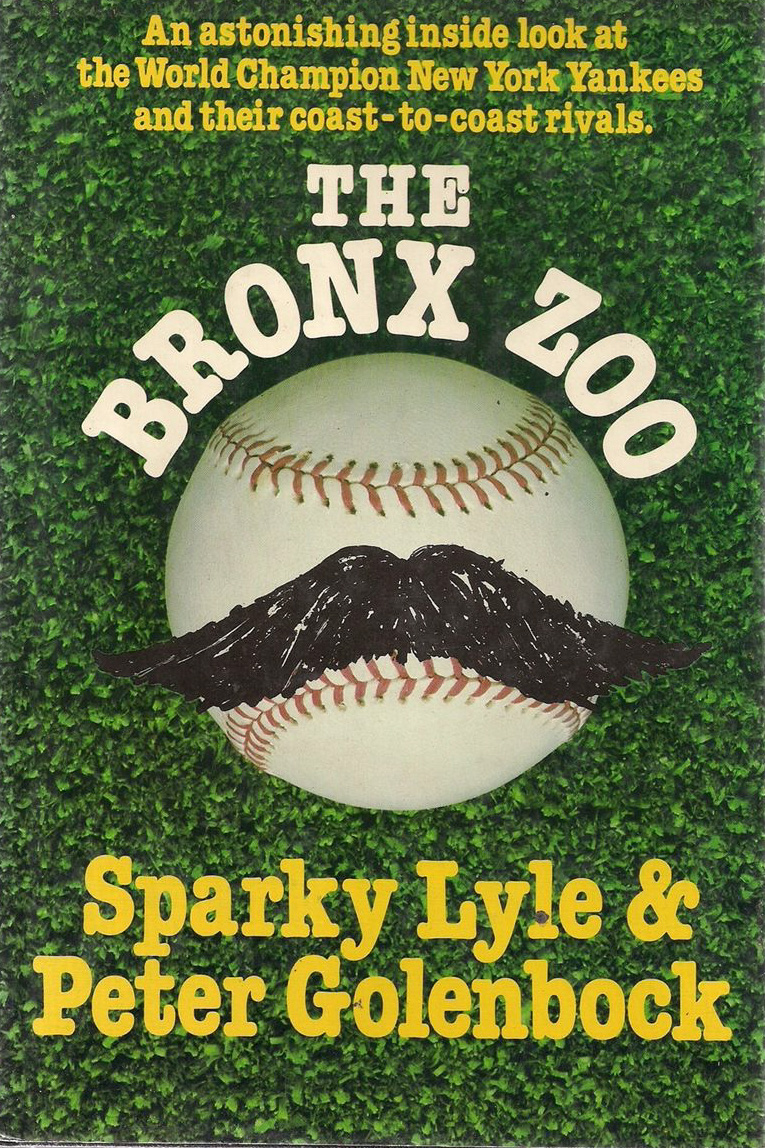
Lyle_editedI followed up with The Bronx Zoo and reminisced about my childhood Yankee teams that won the ’77 and ’78 World Series’.  So much fun.  I can see how this was a groundbreaking book in its time.  Plus, when you consider its author and Cy Young Award winner Sparky Lyle was a childhood favorite of mine and a bit of a local hero (Somerset Patriots), how could I not?

Next up, The Phenomenon: Pressure, the Yips, and the Pitch that Changed My Life by pitcher-turn-centerfielder Rick Ankeil.  I listened to this audiobook.  That may not have been the best approach but let me begin with the positives.  I was a fan of Ankeil when he came up and followed his first year closely (he was on my fantasy team).

ankeilWhen Game 1 of the playoffs against the Braves saw him throw five wild pitches in one inning, the baseball world witnessed something it does not normally see … especially from such a young kid with an expectedly amazing career on the mound.  The guy got the yips and in short, ended his pitching career.

But the reason I bought the book was not because of that day against the Braves.  It is because I have always been fascinated and in awe of Ankeil’s resilience to make it back to the Bigs.  It is an amazing story, one worth having a book written about it.  I am glad he is letting baseball fans like me know the depth of his difficulties with the yips, the monster, the thing and make it back to a successful baseball career.  But if I am being honest, the writing lacked some and although Rick has a cannon for an arm and a nice swing of the bat, that doesn’t translate to an enjoyable and/or engaging audio narration.  But damn, what a story.

haystackThen, I took a friend’s recommendation of Dirk Hayhurst’s books of life in the minors.  I picked up The Bullpen Gospels: Major League Dreams of a Minor League Veteran and laughed from start to finish.  I tore through it.  It was, by far, the single funniest baseball book I have ever read.  Even funnier than Jay Johnstone’s Temporary Insanity … and that was damn funny!  Hayhurst has written three more books since then and I am sure I will read them too; I just have a few other books in front of it.

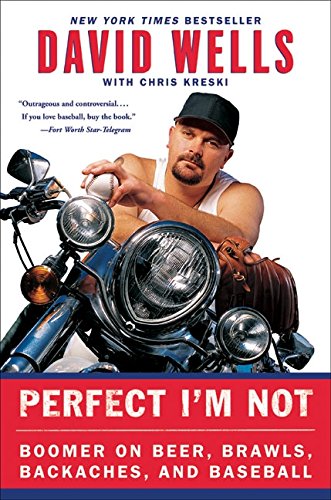
One of which is Perfect I’m Not: Boomer on Beer, Brawls, Backaches, and Baseball by David Wells.

WellsTwo thirds of the way through it and I will tell you this.  Imagine yourself in a bar, throwing back mugs of beer and shots and sitting at a table with Wells.  He tells you one baseball story after another not giving a damn who is listening.  That is this book.  It has its fair share of mundane descriptions of some games, et al.  That said, it is hard to read a baseball book without it (although Molina did an exceptional job of that).

Next on the nightstand after Boomer?

Where Nobody Knows Your Name: Life in the Minor Leagues of Baseball by John Feinstein and The 33-Year-Old Rookie: How I Finally Made it to the Big Leagues After Eleven Years in the Minors by Chris Coste

I do love this game. Can ya tell?

The Perfect Book Group Experience

Three people.  Three books.  Couple bottles of wine.  An indescribably sumptuous chorizo meatloaf with Manchego cheese.. A spirited and engaging discussion.  All this came together one night this past week and made for the perfect book group.

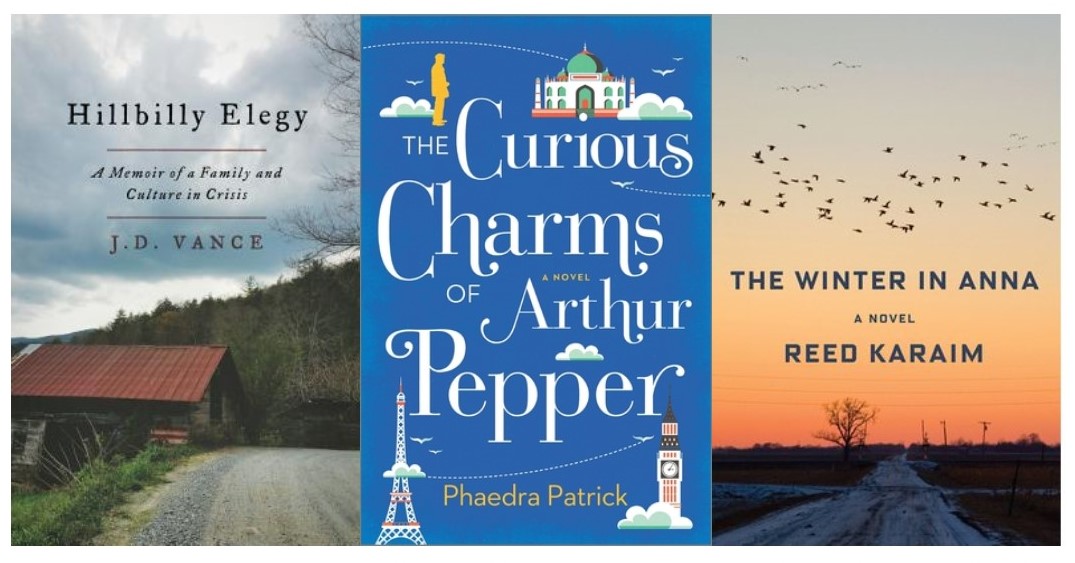
Our friend Evy joined Stacy and I in reading and discussing Hillbilly Elegy by J.D. Vance, The Curious Charms of Arthur Pepper by Phaedra Patrick and The Winter in Anna by Reed Kiram.  Three books.  One month.  All worth our while.

In Hillbilly Elegy we chatted about Vance’s exploration of the Rust Belt culture, white working-class Americans, social and class declines, and the critical role family and loyalty played in his life.  Mind you, by no means can I wax eloquent on the topic, but I can say I walked away with a much better understanding of that world than I did when I started.  Will this inspire me to learn more about it, to become more socially conscious? Perhaps, but if I am being fair, it is not likely.  I have a number of personal causes I contribute to financially and emotionally.  I am not prepared to take on another.
bookclubMarchBooks

It took us about 20 minutes of discussion to cover all we needed to.  As good as it was to read, and interesting as it was to learn about, it did not really move any of us.  At the same time, we were glad we invested the time in reading it.  I am not sure if that makes the right amount of sense, but either way, it is no less true.

The Curious Charms of Arthur Pepper garnered a bit more energy to the group dialogue.

Our titled protagonist was as charming as the jewelry that hung from his now deceased wife’s bracelet.  The people he met, the adventures he went on, the discovery of this life lived before he and his wife met.  All of it made for a fun read.  Yes, predictable at times, but not unforgivably so.

There is something special about a story of someone in the autumn of their years that I love.  It could be the look back.  It could be that I see them just as flawed as any of us.  It could be because they were young once too, with their own plans and schemes all lined up for their life, and nothing went they way they expected it.  That always triggers a bit of a crooked smile in me when I read it.  But above all else I love how there is a deep and loving kindness in their hearts.  They may not have seen it all, but they’ve seen a great deal, and with that comes a peace and wisdom I find myself craving as a middle-aged man.

Yes.  I liked The Curious Charms of Arthur Pepper … mostly because of Arthur himself. Such a dear man.

Then….it came.  The discussion that took us twice as long as any other.  Impassioned.  Frustrated.  Understanding.  Thoughtful.  Did I say frustrated?  Reed Karaim’s The Winter in Anna.

It’s the story of a woman, narrated by a man she knew and called friend. It opens with her death, a horrific and body shuddering suicide in a motel room and ends with a better understanding of why.  

It was dark.  I often thought of the writer at his computer or typewriter and imagined the depths of pain and darkness he slipped into in order to write something so tragically compelling.  I wondered how hard it must have been to climb out of that same darkness and resume a normal life when it was time for dinner and time to socialize with flesh and blood human beings in his presence.  Man, how do you flip that switch?  Or do you not and your family needs to cope and accept you as is?

I digress, but, I did love it.  I truly loved it.  It did what I want every piece of fiction to do when I read it.  Make me think it is non fiction.

Mr, Karaim nailed it for me.

Evy loved it too.  Much for the same reasons, I believe.

Stacy? Well, she repeatedly spoke of how beautiful the writing is, but how she loathed both Eric and Anna.  We agreed on our dislike of him as a young man but I felt he was likable as an adult.  She did not.  Anna drove her up a tree.  Her suicide was borderline unforgivable and aggravatingly selfish.  I cannot say too much because I don’t want to give anything away but suffice it to say what I heard was Stacy felt Anna lacked the courage she needed to do the right thing … and not choose to die.

I can understand where she is coming from.  I can.  

With your indulgence, I would like to help you understand where she is coming from, too.  Stace works with the elderly.  She has for (nearly) 19 years.  Most live with dementia.  This is a woman who fervently believes one’s life choice is their own.  She has told me a hundred times she is planning an escape route of her own if she becomes confused in her older age.  I totally get it.  Dementia and Alzheimer’s is such a destructive disease.  Stacy lives and works with it every day and has for nearly two decades.  Yes, I think she is a saint, but that’s not the point in this blog.  She is a woman who deeply understands and respects life.  She also believes it is our own to make the choices we feel is best.  If you are suffering and if you are dying or deteriorating, then the choice ought to be yours.  At least, that has always been my interpretation of her beliefs.

That was why, after reading and discussing the events of this book, that I was shocked – completely and utterly shocked – that she wasn’t nearly as forgiving of Anna as I thought she would be.

But this is why we read, isn’t it?  To be taken away? To be transported?  To give us a great story to discuss, debate and reflect on with those we connect closest with?

Yeah.  This was the perfect book group.  Such great stories.  Such compelling and heartfelt arguments.  Such a deep and fervent love of reading.  Such incredible women I surround myself with.

It’s OK to be a little envious.  Hell, if I weren’t already me, I would envy me too.  I am surrounded by really smart people with Stacy and Evy, and nothing could be more beautiful.

PS NOTE:   There is one major difference in the reading of The Winter in Anna I think is worth noting.  I read this believing the age difference between the two was eight years (Anna 29, Eric 21) while Stacy thought Anna was late 30’s early 40’s.  If I perceived the age gap that large, I would read it a little differently too.  Anna is still Anna and she owns a piece of my heart.  But my feeling(s) toward Eric likely would have changed and probably not for the better.  They would have mirrored Stacy’s more.

Next Month’s Books are:  Himself, Idaho and Lincoln in the Bardo

bookclubAprilBooks